What is KH?
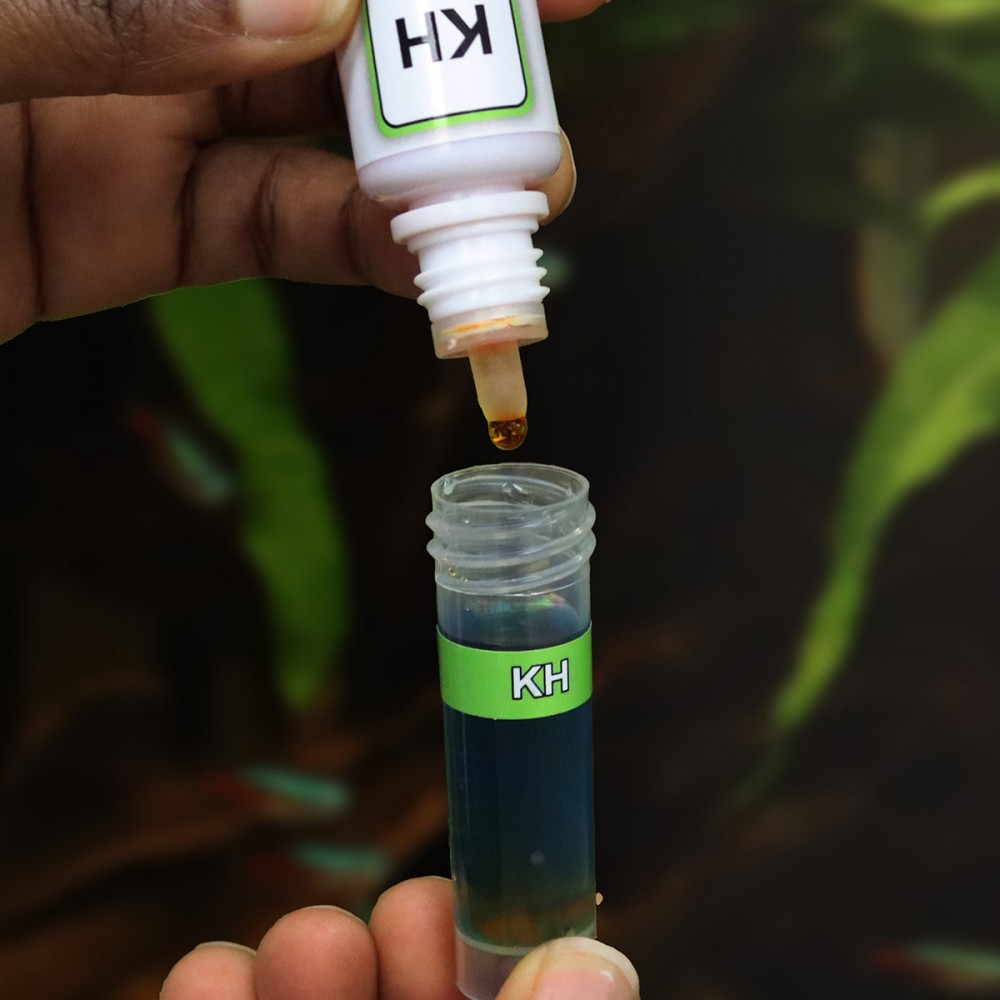
KH, also known as “total alkalinity” or “carbonate hardness”, is a measure of the buffering capacity of the water in your aquarium. The buffering capacity refers to how well it can resist changes in pH.
What is GH?
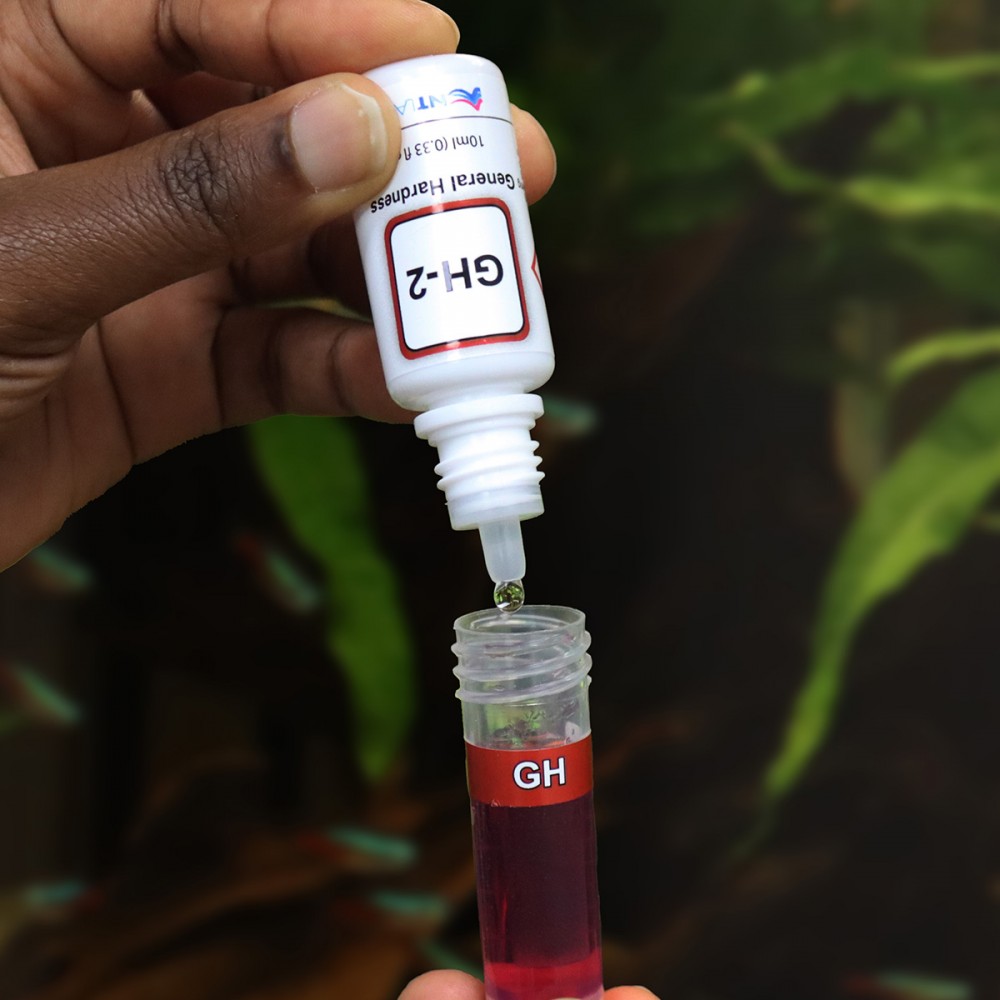
General Hardness is a measure of the total amount of minerals dissolved in the water. Water hardness lies on a spectrum between ‘soft water’ or ‘hard water’ depending on the amount of dissolved minerals: the more minerals present, the greater the hardness. Hard water is responsible for the build-up of limescale.
KH in detail:
What is the correct KH level?
This test kit measures KH in dKH (where one dKH = 17.8 ppm as CaCO3). It is essential to maintain a minimum KH level of at least 4 dKH at all times. A KH of between 6 and 8 dKH is more desirable.
What do I do if the KH level is wrong?
Check the KH level of your tap water. If the level is above 6 dKH, then regular water changes should keep the KH value in the aquarium topped up at a reasonable level. If the KH value of your tap water is below 6 dKH, you will need to add a KH buffer such as KH Up – pH Stabiliser to your aquarium/pond.
How to use?
GH in detail:
What is the correct GH level?
This test kit measures GH in dGH (where one degree = 17.8 ppm as CaCO3). The correct GH depends on the type of fish being kept. For soft water species, aim for a GH of around 3 to 6 dGH, while for hard water species, 10 to 15 dGH is the correct range.
What do I do if the GH level is wrong?
Test the GH of your tap water. The GH of tap water is determined by whether you live in a hard or soft water area. If the water is too hard for the fish being kept, alternative waters can be used, such as reverse osmosis water, to lower the GH. To increase the GH for aquarium fish, calcium carbonate rocks (like ocean rock) can be used to provide a continual source of GH minerals.
How to use?

FAQs:
Q: Why do I run out of 1 reagent before the other(s)? A: We fill our test kit reagent bottles to a minimum amount before they are put through a vigorous QC regime. This means that the vast majority of bottles will in fact be overfilled by varying amounts meaning that the reagents may well run out at different rates but you should be able to carry out at least the number of tests stated on the packaging.
To find out more about water quality and parameters in freshwater aquariums, click here.
For common frequently asked questions, click here.
Looking for fish food? Find our Pro-f range here.

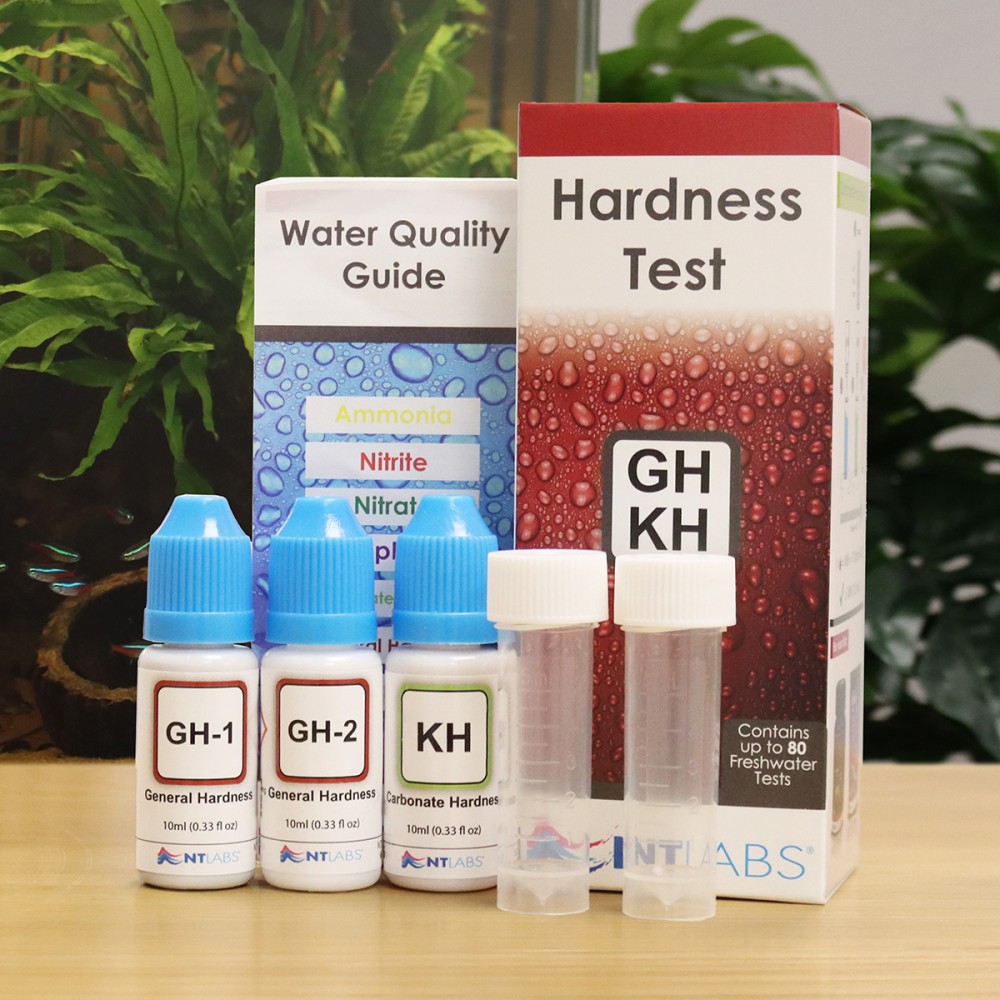
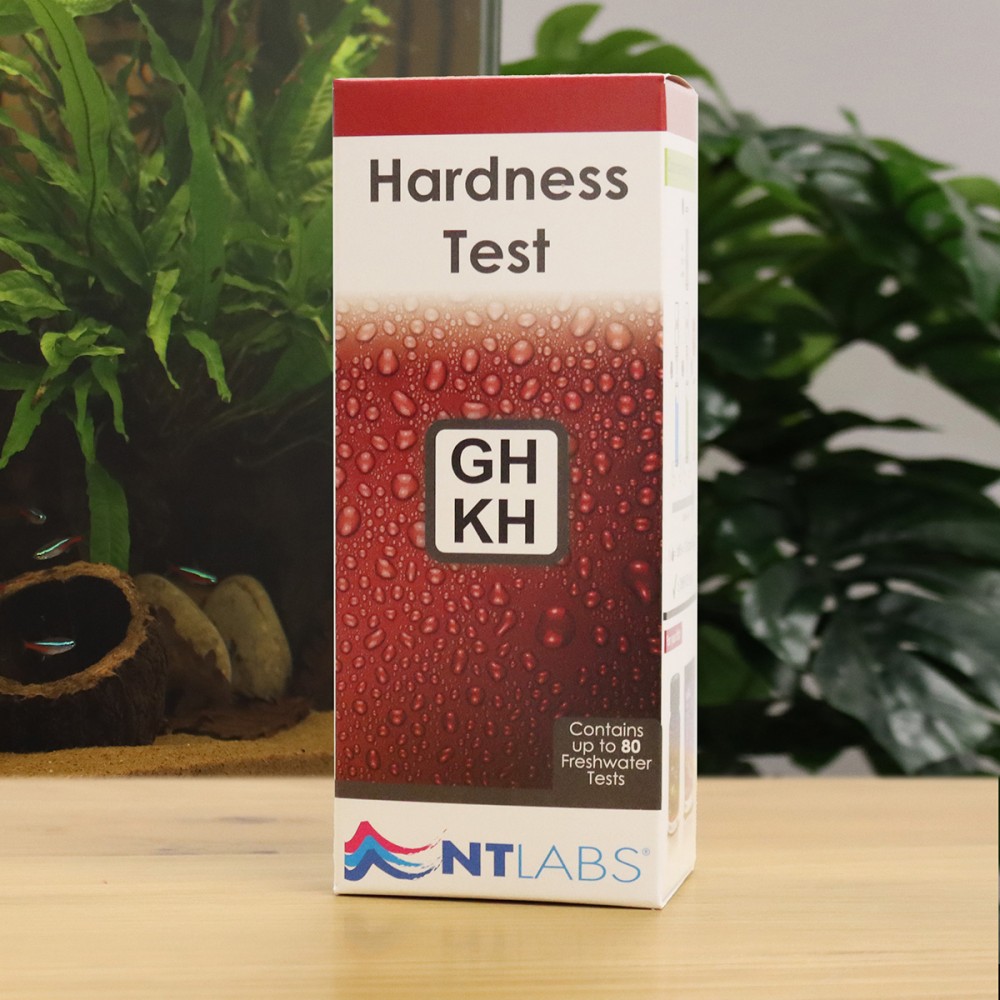
Up to 80 Tests

 Where to Buy?
 Knowledge Hub
 Dosage Calculator
 Diagnosis Tool
 Products
  Indoor
 Outdoor